


After working for twenty-five years in drought-prone Southern Bihar, Karuna-Shechen decided to expand its operations to Purnia, a flood-prone district and one of the poorest in the State. Our initial efforts were designed to be practical and immediate, relying on the commitment of local volunteers to distribute hygiene supplies (such as sanitary napkins) and vegetable seeds.
Access to clean water: a guarantee of health and safety
Initially, one of the primary challenges was ensuring access to water and sanitation systems. To address this, Karuna-Shechen established retention ponds for crop irrigation and groundwater recharge, while installing Karuna Neer filtration systems to ensure access to drinking water and reduce waterborne diseases. At the same time, the construction of sanitation facilities has restored the dignity of the residents while drastically reducing the health risks associated with the lack of sanitation.

Kanchan Devi, a resident of the village of Lakhnara in Purnia District, describes how having a toilet installed in her home has changed her daily life:
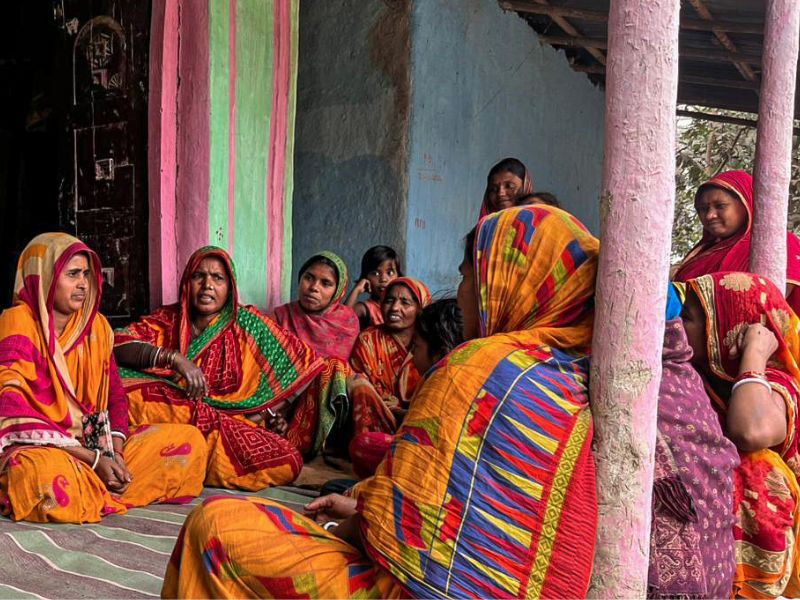
“All these years, we were unaware of the benefits of having a toilet at home. Like most others in our village, we practiced open defecation, and since our region is prone to flooding, this was especially difficult and unsafe. It created many problems for us, particulary for women, and we lived in constant fear of an accident. In January, Chandan and Abhishek from Karuna-Shechen organized a meeting with the women of our community. They discussed the importance of toilet construction.They explained how toilets could improve our safety, dignity, and overall well-being. After the meeting, we women sat together to discuss it in detail. We understood the benefits and collectively decided to build toilets in our homes. Today, having a toilet has made a significant difference in our lives. We no longer have to go to the fields, which has reduced many risks. This has helped prevent accidents and made things much safer for us. We now feel safer and more comfortable in our daily lives.”
A Local Presence for a Multidimensional Approach
Karuna-Shechen chose to strengthen its presence in the region by setting up an office in Purnia and hiring local staff. Having a team on the ground made it easier to stay connected with communities, respond quickly to needs, and ensure that programs were implemented effectively.
Today, the project has evolved into a multi-dimensional approach that addresses different aspects of people’s lives, from food and livelihood to education and health. It is within this framework that, by growing mushrooms or creating their own vegetable gardens, families are now ensuring their food security while stabilizing their household budgets. In practical terms, these activities allow them to eat better and generate new income. We rely on these simple solutions because they are the ones that become a sustainable part of daily life.


Cultivating Knowledge
Education and empowerment are another key focus of our work. Our non-formal education center (NFE) provides women with the opportunity to pursue formal schooling, helping them rediscover the joy of learning. Alongside this, computer training programs are being conducted to help young people build skills that are increasingly essential for employment today. These efforts aim to open up new opportunities and reduce the gap between rural youth and the job market.

This focus on the future begins at a very young age, thanks to close collaboration with Anganwadi centers (preschools) to support early childhood development (ECD). These interventions focus on improving the health, nutrition, and learning environment of young children, giving them a better start in life.
Moving Forward
Karuna-Shechen’s commitment does not end at the borders of Purnia. A new phase is taking shape with the deployment of mobile clinics to provide basic healthcare to the most isolated communities. Building on this model, which combines active listening with concrete solutions, the organization is preparing to expand its work to new areas in Purnia and the neighboring district of Kishanganj. This journey is based on careful assessment of needs and reflects a continued commitment to reaching the most underserved areas.
Overall, the journey in North Bihar shows how the program has gradually evolved from small, immediate interventions to a more comprehensive and connected approach to development. By working across various areas like health, education, livelihood, and infrastructure, Karuna-Shechen is trying to support communities in a way that is both practical and sustainable. Most importantly, the approach remains rooted in listening to people, involving them in the process, and empowering them to build their own future.