


On August 26, severe flooding struck northern Nepal. In response to the scale of the disaster, Karuna-Shechen is mobilising €500,000 and launching an emergency fund to support affected communities and strengthen its response on the ground.
A sudden flood, triggered by the collapse of a glacier in the Himalayan region along the Nepal–Tibet border, caused a powerful debris flow and a sudden surge of water downstream. The districts of Rasuwa, Nuwakot and Dhading are among the areas most affected. The disaster has claimed many lives, with several hundred people still reported missing. Roads, bridges and other essential infrastructure have also been destroyed, isolating many communities and making access to some areas particularly difficult.
Karuna-Shechen has been working in Dhading district for many years. The communities in the highlands of Ruby Valley and Khaniyabas are safe, as are the local teams.
The local teams are mobilised. Initial emergency assistance is already being deployed and a needs assessment is underway to adapt our response as closely as possible to the needs of affected communities.

Sunita Sharma — Director, Karuna-Shechen Nepal
“We are in contact with the rural municipalities that have been most affected. They tell us that people urgently need basic necessities: drinking water, food, shelter, clothing and medicine. Many people have lost their homes and loved ones and are now living in temporary shelters. It is an extremely difficult time for those who have survived. We are working to identify the most urgent needs so that an appropriate response can be put in place as quickly as possible.”
Karuna-Shechen’s response on the ground
September 14–15, 2026 | Psychological Support Takes Shape
Following the initial distributions, Karuna-Shechen is also putting psychological support in place for people affected by the floods, particularly children and families.
On September 14, 24 volunteers from affected communities began training in Psychological First Aid. The training will provide them with the guidance and tools they need to listen to, support and refer people who may need further assistance.
Once trained, the volunteers will work in temporary shelters and schools. They will also help gather people’s concerns and expressed needs, informing the next steps of the support provided.


September 11–15, 2026 | Responding to Urgent Needs
Karuna-Shechen teams continue distributing aid in Bidur, in Nuwakot District, and in Uttargaya Rural Municipality, in Rasuwa District. They are also continuing to listen to communities and respond to their most urgent needs.

In Bidur, access to drinking water remains particularly difficult in Wards 7, 8 and 9. While the usual water sources are being restored or sustainable solutions are put in place, Karuna-Shechen is supplying 7,000 litres of drinking water every day to the communities concerned.
Other needs have also been identified, including at the Betrawati temporary shelter, where displaced people need individual water filters, plastic containers and umbrellas. These needs will help guide the next steps of the response.
September 5-10, 2026 | Continued Distributions and Strengthened Field Response
Distributions are continuing. Further assistance has been sent to Bidur, in Nuwakot District, and distributed to affected communities in Uttargaya Rural Municipality, in Rasuwa District. Clothing, hygiene kits, blankets, kitchen supplies and food items have been distributed, among other essential items.
As the response progresses, needs evolve and new priorities emerge. Karuna-Shechen has therefore begun procuring jackets, torches and solar lights in response to needs identified in coordination with communities and local authorities.


To strengthen the monitoring of the response, a new coordinator has joined the team. They will oversee the coordination of interventions and monitor needs on the ground.
September 4, 2026 | Preparing for the Next Phase of the Response

Following the distributions carried out in Nuwakot, the Karuna-Shechen teams continue to monitor the situation from Kathmandu. They remain in contact with affected communities, local representatives and authorities to follow developments and identify the areas where needs are most urgent, so that future interventions can be targeted and assistance adapted accordingly.
A new distribution is planned in the coming days, while the response is also preparing to integrate psychosocial support for affected communities and schools.
September 3, 2026 | Reaching where help is still scarce
In some affected areas of Nuwakot District, needs remain high while assistance is still limited. Karuna-Shechen is therefore deploying two convoys there this morning, carrying essential supplies.
In Betrawati, the first convoy has reached a shelter currently hosting 21 tents and around 54 displaced people. The teams distributed essential supplies and conducted an initial assessment of living conditions. This assessment identified significant needs for drinking water, sanitation facilities and electricity. Communities also reported an urgent need for health services, as well as additional tents and mattresses.


Towards Tupche, the second convoy is continuing on its way, slowed down by significant traffic difficulties.
September 2, 2026 | Distributions continue

Karuna-Shechen continues its response to support people affected by the floods. In Kathmandu, several hundred pillows, pillowcases, bed sheets and blankets were distributed to displaced people from Syafrubesi, in Rasuwa District, who are staying at the temporary shelter at Yellow Gumba.
At the same time, preparations for further assistance are underway, with various kits and essential supplies being organized and packed.


September 1, 2026 | Coordination and preparation for a new field deployment
Following the first field intervention, Karuna-Shechen is strengthening its response coordination from its Kathmandu office. The emergency response team is expanding to coordinate procurement, logistics, engagement with local authorities and relief distribution.
A new field deployment is also planned for 2 September, with additional kits and essential supplies for displaced families. This intervention will also allow the team to continue assessing the needs of affected communities.
August 31, 2026 | First field intervention
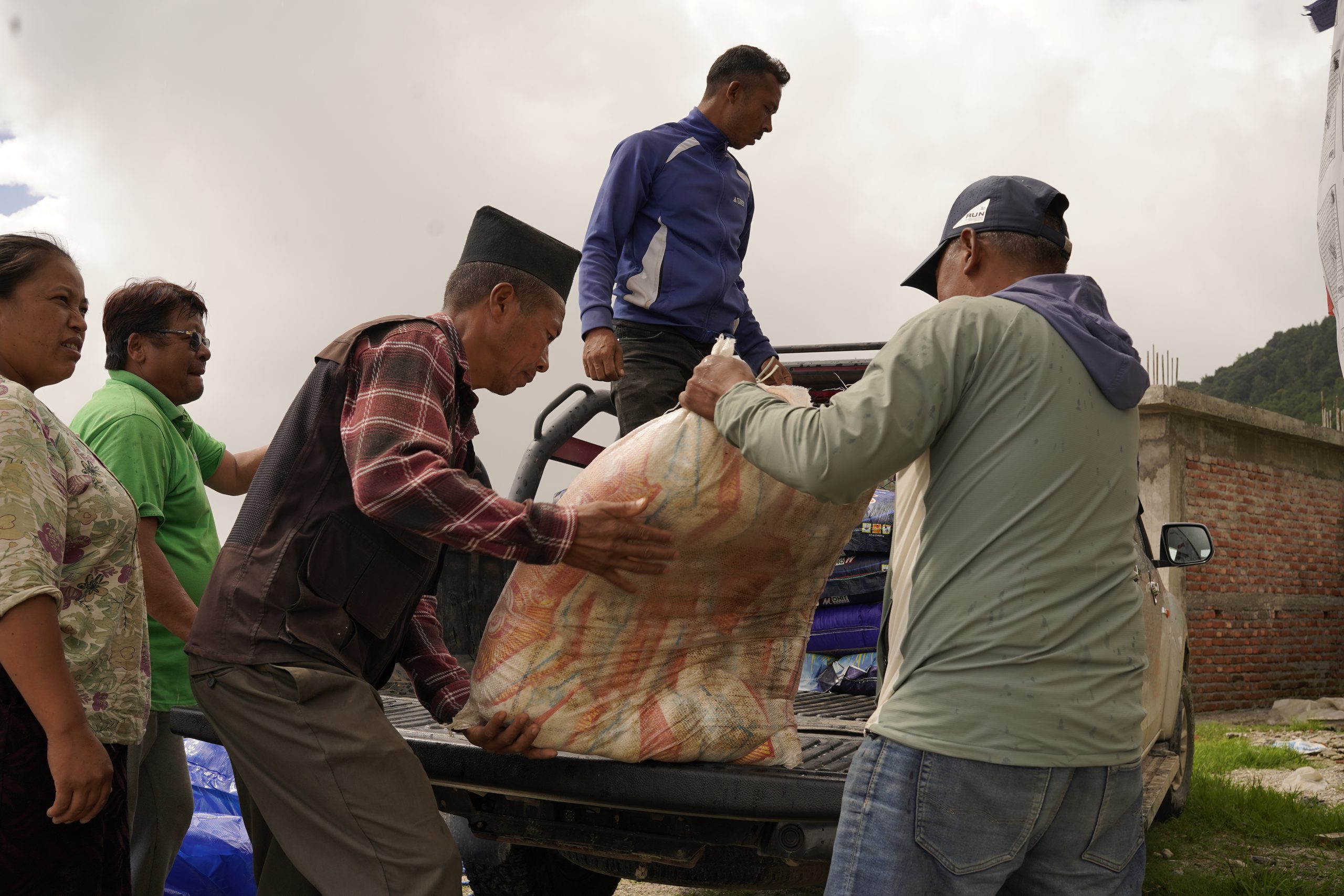
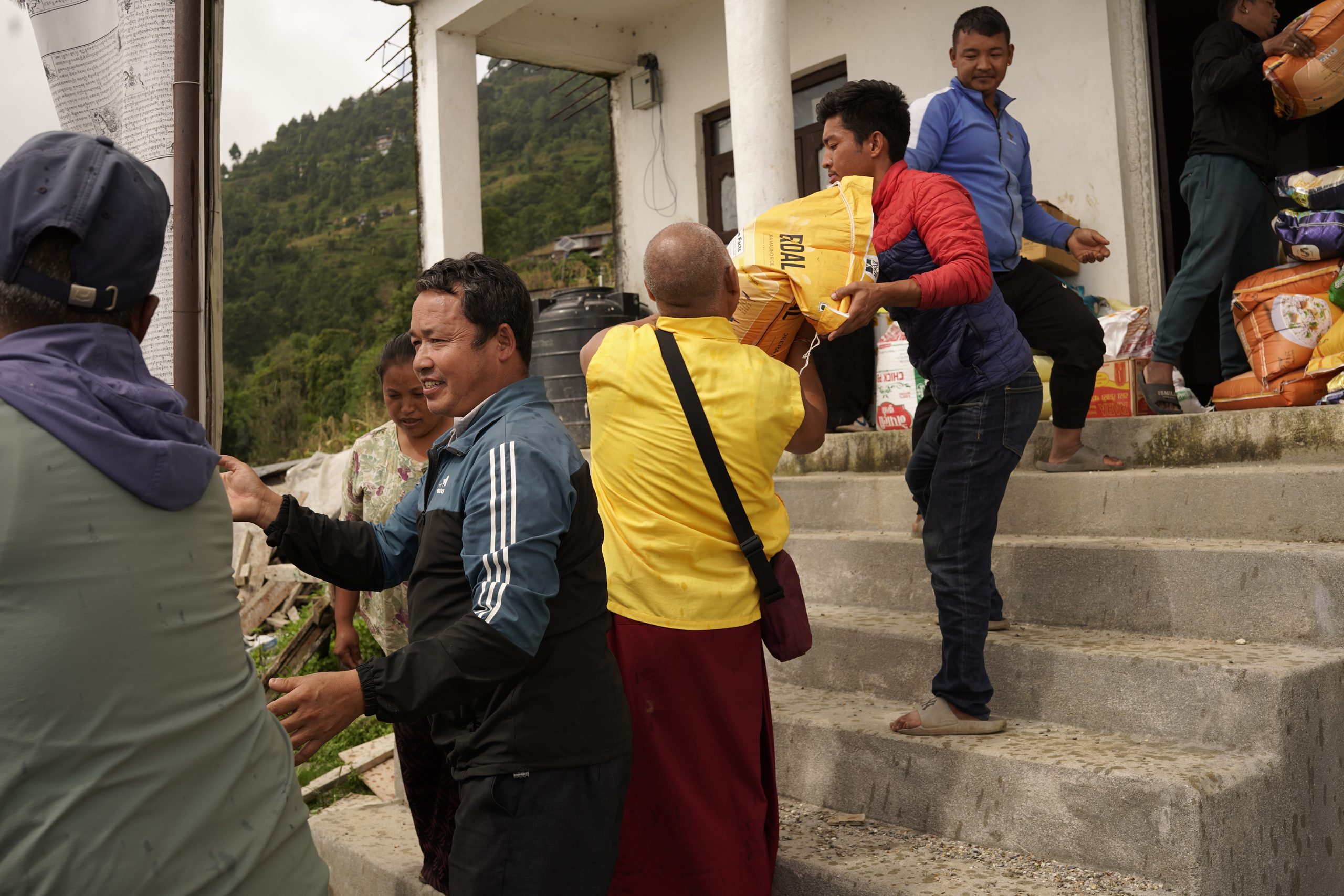
The Karuna-Shechen Nepal team has arrived on the ground in Rasuwa District, where initial emergency assistance is being distributed to displaced families.



August 30, 2026 | Initial emergency assistance is being deployed
In coordination with Kalika Rural Municipality in Rasuwa District, Karuna-Shechen is preparing initial assistance for displaced families staying in a temporary settlement camp. This includes 800 kg of rice, 400 kg of beaten rice (chiura) and 200 litres of drinking water, as well as lentils, oil, salt, sugar and tea.

After several days when access to the affected areas was severely disrupted, the army cleared the roads, allowing the Karuna-Shechen Nepal team to travel to the area on August 31.
On the ground, the team will meet with displaced communities and assess their needs in food, water and sanitation, shelter, health and protection, in order to determine Karuna-Shechen’s next steps.
August 28-29, 2026 | Coordination and needs assessment
Karuna-Shechen is working with its local partners to identify priority needs, particularly around food, drinking water, health and shelter, and to determine the most appropriate ways to respond to the situation on the ground.
The teams are continuing this assessment and coordination phase to prepare a targeted and rapid response, complementing the efforts led by the authorities and other organisations working in the affected areas.
August 26-27, 2026 | Initial information and mobilisation
As soon as information about the scale of the flooding emerged, the Kathmandu teams contacted our local Karuna-Shechen offices in the rural municipalities of Ruby Valley and Khaniyabas in Dhading District. The teams and the communities they support are safe, but damage to roads and infrastructure is making access particularly difficult.
To strengthen its response, Karuna-Shechen is mobilising €500,000 and launching an emergency fund, enabling the organisation to provide support based on needs identified on the ground.