


Born during the COVID-19 crisis, Karuna-Shechen’s Resilience Program was built around one conviction: caring for those who care for others is essential. After several years of experimentation and more than 1,000 people supported, the program is now entering a new phase with the creation of the Kyklos Institute. Franck Blot, who initiated the project, reflects on this journey and the convictions that continue to guide it.
Caring for Those Who Care for Others
In 2020, the COVID-19 crisis led Karuna-Shechen to consider how the organization could take meaningful action in France, alongside its programs in India and Nepal. This reflection was rooted in a particular realization: “We became aware of the suffering experienced by healthcare workers, caregivers, and all those who dedicate themselves to caring for others,” recalls Franck Blot.

To develop an initiative suited to the French context, the organization drew on a principle already at the heart of its work: altruism. “Matthieu Ricard has been spreading a message about altruism and meditation in France. So it felt quite natural to develop an emotional intelligence program connected to altruism.”
The Resilience Program was born with a clear ambition: to give people who care for others the space and tools they need to look after their own psychological well-being.
Mental Health: A Collective Responsibility
The first experiences working with organizations brought several realities to light. “The vast majority of healthcare workers and caregivers feel alone, often with a sense of helplessness.” Accustomed to caring for others, they can find it difficult to give themselves the same attention, sometimes feeling “guilty or somewhat reluctant to talk about the need to take care of themselves.”
Their struggles are also linked to the conditions in which they work: “The suffering experienced by healthcare workers and caregivers is, for the most part, structural. It stems from budget cuts and growing demands, with fewer and fewer resources, both financial and human.”
These observations have shaped the program’s distinctive approach. Rather than placing responsibility for mental health solely on individuals, Resilience focuses on the quality of relationships and a group’s ability to care for its members. “When someone is experiencing difficult emotions, they are not solely responsible for those emotions or for the tensions they face at work!” Franck emphasizes.
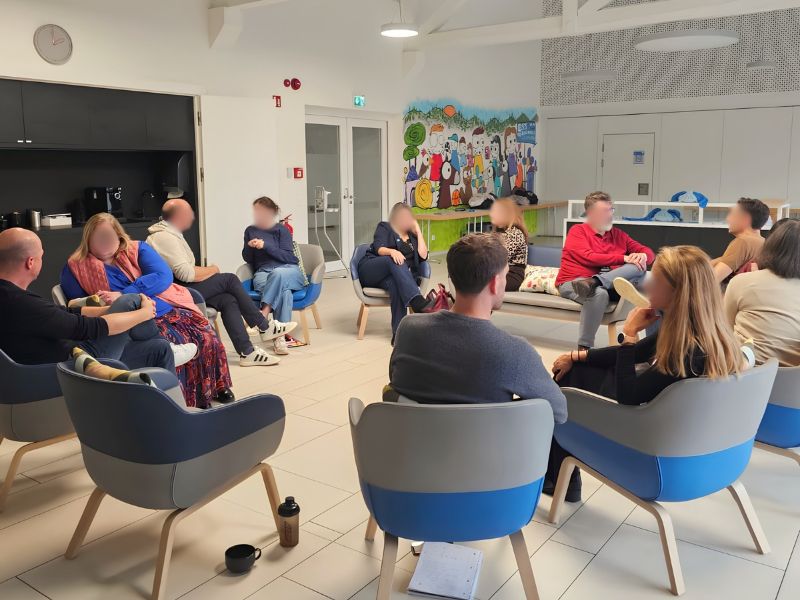
Group discussion circles play a central role in this approach. They provide a space where everyone can express their difficulties and show vulnerability without fear of judgment. The facilitators take part in the discussions and exercises themselves, alongside the other participants.
“Every organization told us that it was the first time they had ever come together in a discussion circle,” Franck recalls. These weekly gatherings gradually became much-anticipated moments, offering a safe space to share difficulties. Leadership teams are also invited to take part, encouraging dialogue across all levels of the organization. “The real goal is to ‘support mental health by transforming the way people relate to one another.’ Everyone has a role to play.”
Encouraging Results
Since 2020, the program has evolved to better meet the needs of the organizations it works with. It has incorporated new practices, particularly those based on polyvagal theory and dyadic exercises, and draws on scientific research to shape each session.
More than 1,000 people have taken part in the program, and 20 facilitators have been trained. An impact study involving 76 participants from the 2024 and 2025 cohorts, assessed before and after the program, confirms several positive changes.
The average psychological well-being score, measured using the World Health Organization’s WHO-5 Well-Being Index, increased by 5.8 points out of 100, from 61.1 to 66.8. The proportion of participants scoring below the WHO’s well-being threshold fell from 29% to 14%. Finally, 89% of participants said they would recommend the training to their colleagues. (2025 Impact Study)
The Kyklos Institute Takes Off
In 2024 and 2025, support from the Fonds de dotation Nouveau Monde made it possible to offer the program to organizations that lacked the financial resources to participate and to train new facilitators.
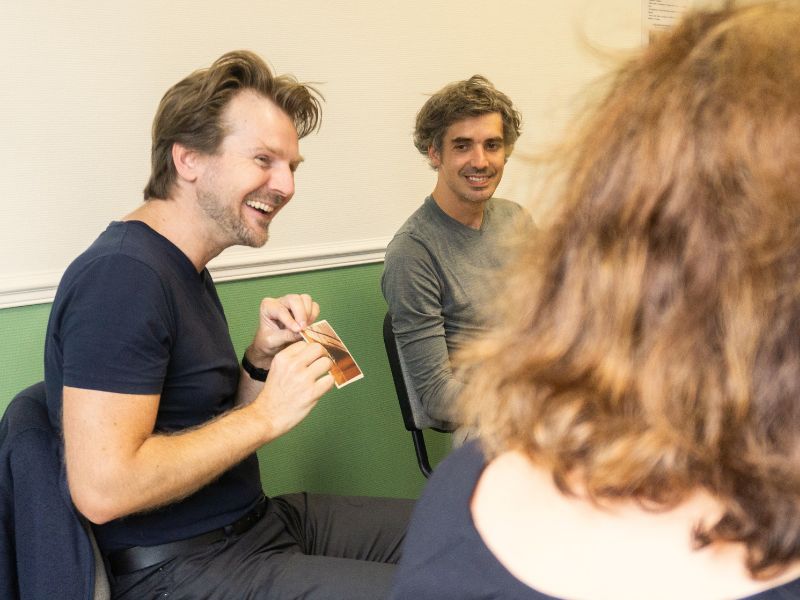
A new chapter begins with the creation of the Kyklos Institute, a social enterprise that will take over the development of the program in France and Europe. “We wanted to change our economic model and no longer depend on grant funding. We felt that creating a social enterprise was the best way to continue expanding the program’s reach while retaining the ability to offer it free of charge in certain cases,” explains Franck Blot.
This transition also allows Karuna-Shechen to remain focused on its long-standing mission among communities across the Himalayan region, concentrating its resources on its work in India and Nepal.
Keeping an Altruism-Based Approach Alive
Although the program is now taking flight independently of Karuna-Shechen, its founding spirit remains at the heart of the Kyklos Institute’s work. The institute is committed to keeping the program accessible: for every six programs sold, one is offered free of charge to an organization that could not otherwise afford it. It also intends to continue building on scientific research, with the creation of a scientific committee and plans to publish studies on mental health and discussion circles.
In the longer term, the Kyklos Institute aims to become a recognized leader in these fields, developing training programs, conferences and events exploring different types of discussion circles, including restorative justice circles and circles for survivors of trauma.
For Franck Blot, this new chapter represents much more than the creation of an organization: “It is truly a powerful inner drive taking shape in a concrete project.” A project guided by a conviction that has remained unchanged since the beginning: “Listening, connection and presence are absolutely essential!”